

Why Angular Velocity Matters – A Practical Guide
Introduction
When we talk about movement in sport, we often default to outcomes we can easily see or measure. Jump height, sprint time, peak force, or maximal strength dominate performance conversations. These metrics are useful, but they describe the result of movement rather than the movement itself.
At the heart of every explosive action, rapid change of direction, or powerful strike is a more fundamental variable that governs how movement is produced. That variable is angular velocity.
This article introduces angular velocity from first principles, explains how it relates directly to joint motion, and outlines why it remains one of the most powerful yet underused tools for improving performance and identifying injury risk in sport.
What Angular Velocity Really Is
Angular velocity describes how fast an angle changes over time. While linear velocity tells us how quickly something moves through space, angular velocity tells us how quickly something rotates.
Human movement is rotational by nature. Bones rotate about joints, not through empty space. Every step, jump, throw, and strike is created by a coordinated sequence of joint rotations. When a joint angle changes, movement occurs. When that angle changes quickly, movement becomes explosive.
From a physics perspective, angular velocity is defined by a simple relationship:
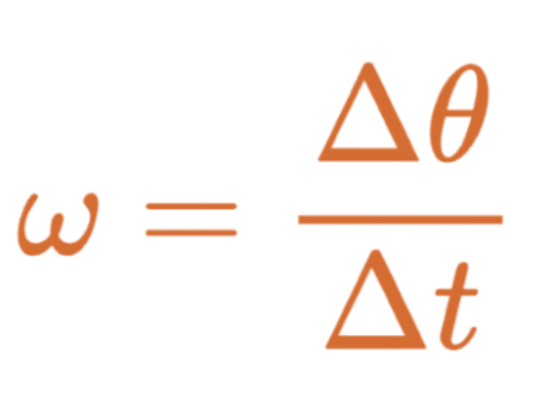
Where ω is angular velocity, Δθ is the change in angle, and Δt is the time taken to produce that change. Angular velocity is commonly expressed in degrees per second or radians per second.
This equation can be understood as a simple mental model for movement.
First, angle represents how much a joint moves. Time represents how long it takes to move. Angular velocity tells us how aggressively that movement is expressed.
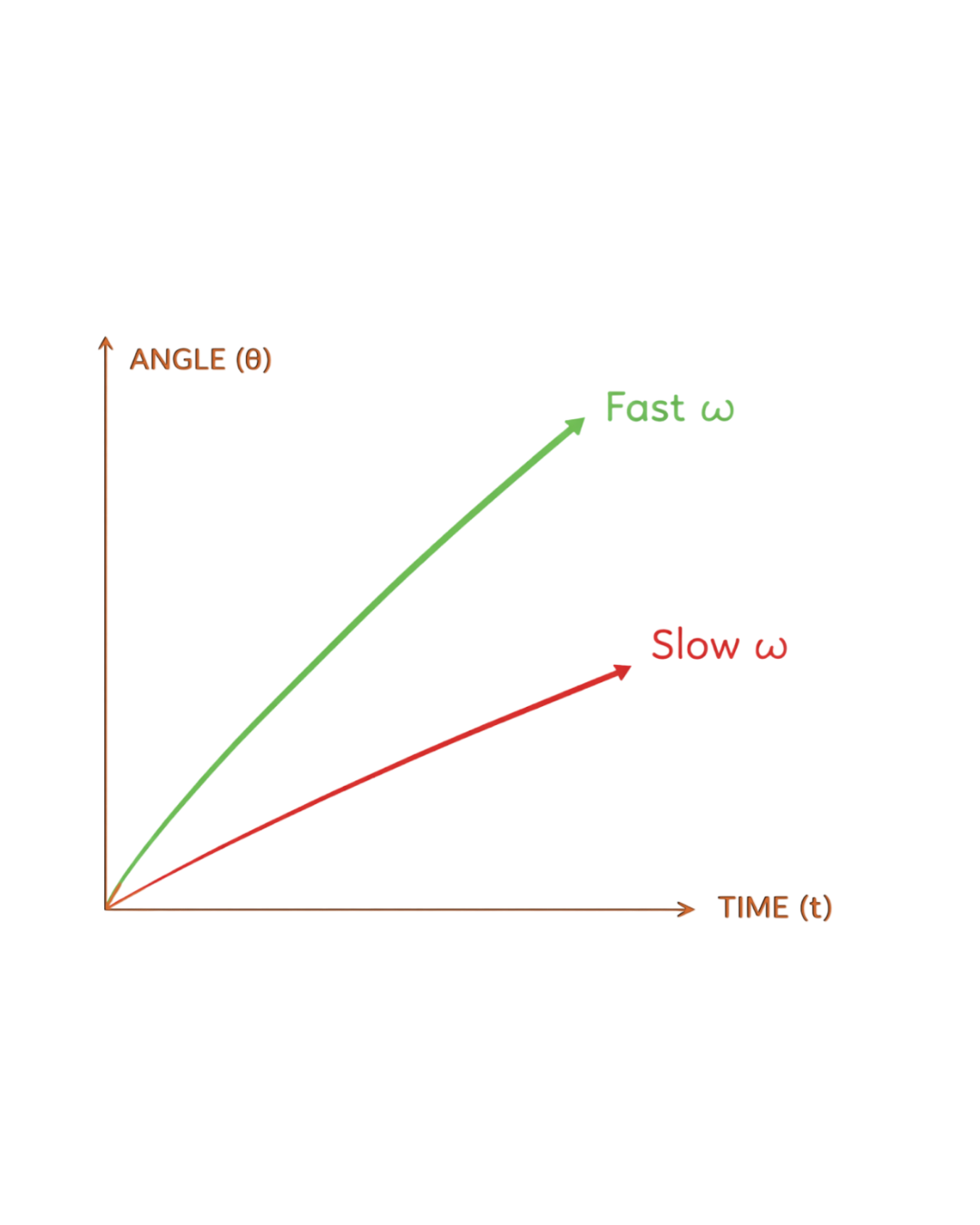
If two athletes move through the same joint angle, the one who does it in less time has a higher angular velocity. Nothing else about the movement needs to change. The range of motion can be identical, yet the movement demand can be vastly different.
This is why angular velocity captures something that joint angles and peak forces alone cannot. It describes the urgency of movement. It tells us whether a joint is drifting into position or snapping there explosively.
A useful way to think about angular velocity is this:

From Angles to Joint Motion
Angles are the language of biomechanics. A joint angle describes the orientation of two body segments relative to each other. Movement happens when that relationship changes.
Consider knee extension during a jump. The thigh remains relatively stable while the shank rotates forward. The knee angle opens rapidly, and the speed of that opening is the knee’s angular velocity.
Two athletes may reach the same joint positions and even produce similar peak forces. However, if one athlete reaches those positions faster, the underlying movement demands are completely different. Angular velocity captures this difference directly. It reflects how aggressively joints are rotating and how quickly the neuromuscular system is expressing force.
Why Angular Velocity Drives Performance
High performance sport is not defined by force alone. It is defined by how quickly force can be applied and transferred through the body.
Angular velocity provides a window into explosiveness, coordination, and technical efficiency. Faster joint angular velocities often reflect superior neuromuscular drive, better sequencing of segments, and a greater ability to express strength under time pressure.
This is why elite performers consistently demonstrate higher peak joint angular velocities during sprinting, striking, throwing, and cutting tasks. They are not just strong. They are fast at the joint level.
For athletes, this creates a clear opportunity. By understanding and training using angular velocity, they can identify where movement speed is limiting performance. They can distinguish between strength limitations and coordination or timing issues. They can also monitor whether increases in gym strength are actually translating to faster joint motion on the field.
Gaining a Competitive Advantage
Athletes who understand angular velocity gain access to a deeper layer of performance insight. They can see not just what movement looks like, but how fast it is happening.
By analysing joint angular velocities, athletes can identify which joints are truly limiting performance. They can determine whether a performance ceiling is driven by strength, coordination, or sequencing rather than guessing based on outcomes alone.
Angular velocity also allows athletes to track whether improvements in strength and power training are actually transferring to faster movement on the field, court, or track. If joint speeds are not increasing, performance gains are unlikely to be sustainable.
This creates a clear competitive advantage. Training becomes targeted, progress becomes measurable, and movement efficiency improves where it matters most.

Why Movetru Changes the Game
Historically, angular velocity has been difficult to measure outside of complex laboratory environments. As a result, it has remained largely absent from everyday training and performance decision making.
Movetru changes this.
By capturing high resolution joint angular velocity data in real world sporting environments, Movetru allows athletes to understand how they actually move when it matters most. It reveals how fast joints rotate, how movement speed changes under fatigue, and where asymmetries or compensations emerge under load.
This transforms angular velocity from an abstract concept into a practical performance tool. Athletes can train with clarity, coaches can make better decisions, and performance development becomes grounded in how movement is truly expressed.
Angular velocity is not a niche metric. It is a foundational one. Movetru makes it visible, actionable, and meaningful.
Dylan McBurney | Movetru CTO